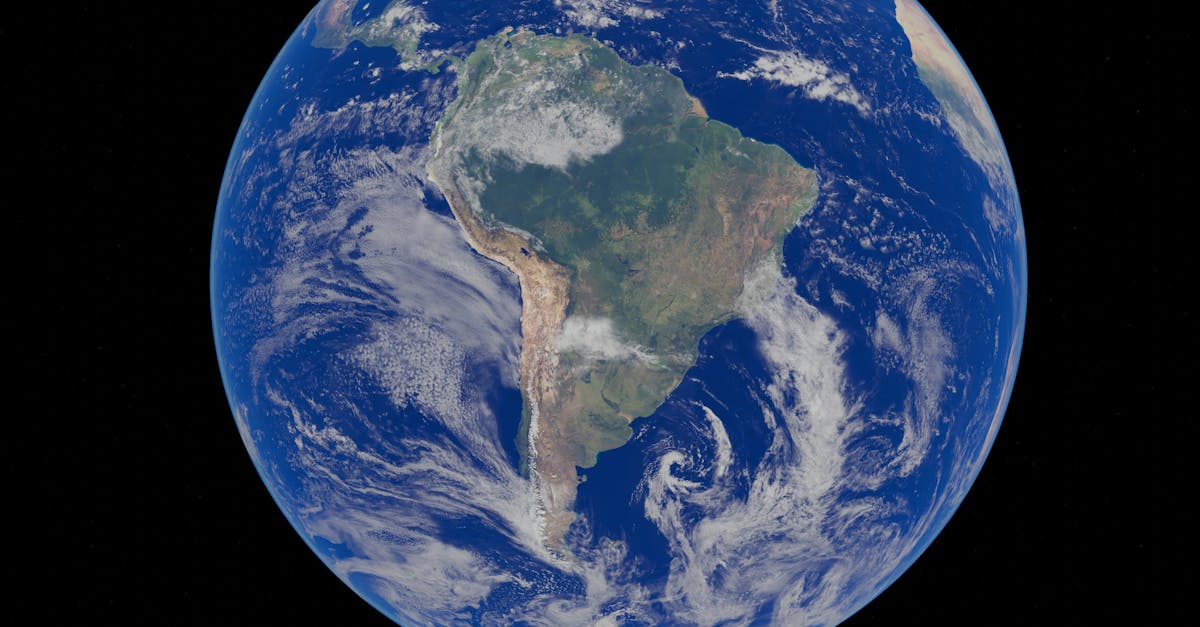
The greenhouse effect is one of those scientific ideas that sounds simple at first but turns out to be deeply important for understanding why our planet looks and feels the way it does. Without it, life as we know it would not exist. With too much of it, however, Earth’s climate begins to shift in ways that challenge ecosystems, societies, and long-standing assumptions about stability. Learning how the greenhouse effect works helps explain both the planet’s natural balance and the changes now drawing global attention.
At its core, the greenhouse effect describes how Earth manages to stay warm despite the cold emptiness of space. Sunlight reaches the planet mostly in the form of visible light, passing easily through the atmosphere and warming land, oceans, and living things. Once absorbed, this energy does not simply vanish. The warmed surface releases energy back upward as infrared radiation, a type of heat energy that behaves differently from incoming sunlight.
Here is where the atmosphere plays its crucial role. Certain gases, known as greenhouse gases, are particularly good at absorbing infrared radiation. Water vapor, carbon dioxide, methane, and nitrous oxide all act like an invisible insulating layer. They absorb some of the outgoing heat and re-emit it in all directions, including back toward the surface. This process keeps temperatures far higher than they would otherwise be. Without this natural greenhouse effect, Earth’s average surface temperature would be well below freezing, making liquid water—and life—extremely unlikely.
An often-forgotten detail is that the greenhouse effect is not a solid “lid” trapping heat, but a dynamic process involving constant energy exchange. Heat is continually escaping into space, but greenhouse gases slow that escape just enough to maintain a stable, habitable climate. This balance developed over billions of years and has fluctuated naturally due to volcanic activity, changes in Earth’s orbit, and biological evolution.
The issue arises when the concentration of greenhouse gases increases faster than natural systems can adapt. Carbon dioxide, for example, is released naturally through respiration, decay, and volcanic eruptions. However, the large-scale burning of fossil fuels has added vast amounts of extra carbon dioxide to the atmosphere in a relatively short time. Because carbon dioxide can persist for centuries, today’s emissions influence climate far into the future, long after the original sources are gone.
Another subtle point is that not all greenhouse gases behave the same way. Water vapor is the most abundant, but it responds quickly to temperature changes rather than driving them directly. Carbon dioxide and methane act more like control knobs: small increases can trigger larger feedbacks, including more water vapor in warmer air. Methane, though shorter-lived, traps much more heat per molecule than carbon dioxide, making leaks from agriculture and energy systems disproportionately important.
The greenhouse effect also helps explain why different planets have dramatically different climates. Venus, with a thick carbon-dioxide-rich atmosphere, experiences a runaway greenhouse effect that produces surface temperatures hot enough to melt lead. Mars, on the other hand, has a thin atmosphere that cannot retain much heat, leaving it cold and barren despite receiving sunlight.
Modern climate science, synthesized by organizations such as the Intergovernmental Panel on Climate Change, focuses on understanding how human activity is altering this finely tuned system. The basic physics of the greenhouse effect has been understood for well over a century, but its long-term consequences are only now becoming visible in melting ice, shifting weather patterns, and rising sea levels.
Ultimately, the greenhouse effect is neither good nor bad by itself. It is a fundamental feature of Earth that makes life possible. The challenge lies in recognizing how sensitive this invisible heat-trapping system is—and how small changes in atmospheric composition can lead to large, lasting transformations of the planet we depend on.