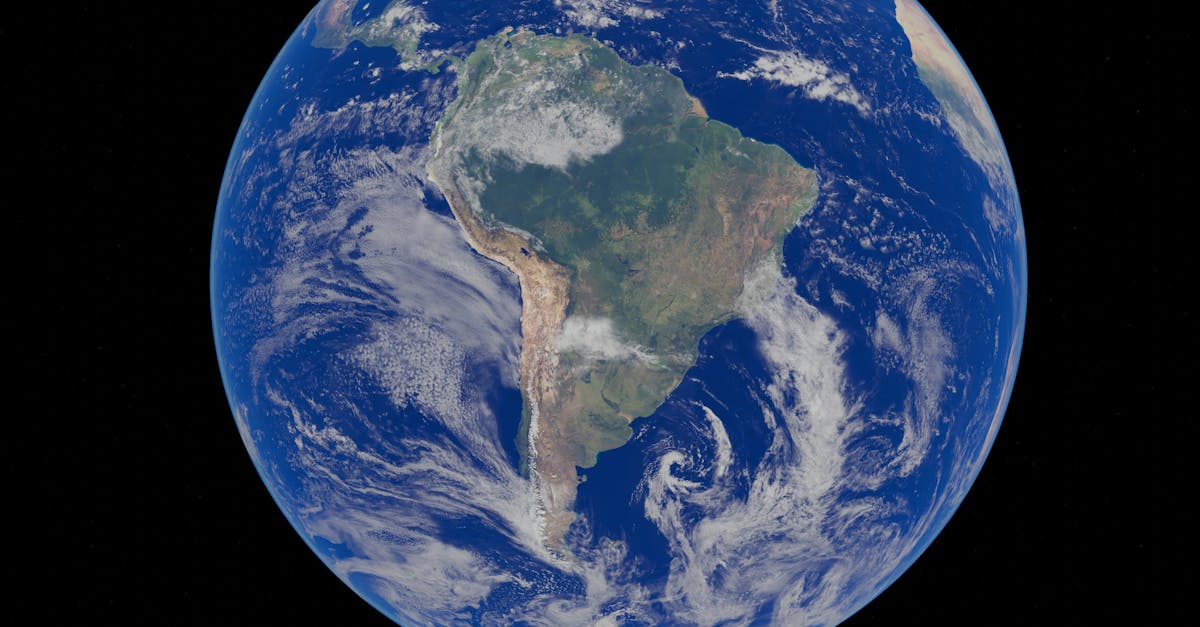
When we think about climate, we often imagine the atmosphere as the main driver—winds, clouds, and storms moving heat around the planet. Yet beneath the ocean’s surface lies an equally powerful system that works quietly and continuously: ocean currents. These vast, slow-moving rivers of seawater connect the tropics to the poles, shaping weather patterns, stabilizing temperatures, and making much of Earth habitable. Without them, the global climate as we know it would look radically different.
At their most basic level, ocean currents are driven by two main forces. Surface currents are pushed by winds and influenced by Earth’s rotation, while deep currents are controlled by differences in water density, which depend on temperature and salinity. Warm water is lighter and tends to stay near the surface, while cold, salty water sinks and flows along the ocean floor. Together, these motions form a global circulation system sometimes called the ocean’s “conveyor belt,” constantly redistributing heat around the planet.
One of the most famous examples is the Gulf Stream. This powerful current carries warm water from the Gulf of Mexico across the North Atlantic toward Europe. Because of it, cities like London or Paris experience far milder winters than other regions at similar latitudes, such as parts of Canada. When people forget how much the ocean influences climate, they often underestimate how dependent regional weather is on these invisible flows.
Ocean currents also play a crucial role in regulating global temperature. The oceans absorb vast amounts of heat from the Sun, especially in equatorial regions. Currents then transport this heat poleward, preventing the tropics from overheating and the polar regions from becoming even colder. This redistribution acts as a planetary thermostat, smoothing out extreme temperature differences and making Earth’s climate more stable over long periods.
Beyond heat, currents move nutrients, oxygen, and carbon through the ocean. Upwelling currents bring cold, nutrient-rich water from the deep ocean to the surface, fueling plankton growth and supporting some of the world’s richest fisheries. At the same time, ocean circulation helps the sea absorb carbon dioxide from the atmosphere, storing it for centuries in deep waters. This natural process slows the pace of climate change, though it has limits that scientists are still working to understand.
Some ocean current systems have effects that are felt worldwide. The El Niño is a periodic disruption of normal currents in the Pacific Ocean. When warm surface water spreads eastward toward South America, it alters rainfall patterns across the globe, triggering floods in some regions and droughts in others. Events like this remind us that changes in ocean circulation can ripple through the entire climate system.
Another key player is the Atlantic Meridional Overturning Circulation, a deep current system that includes the sinking of cold, dense water in the North Atlantic. This circulation helps drive the long-term movement of heat between hemispheres. Scientists closely monitor it because evidence suggests it may be slowing due to warming and freshwater input from melting ice. Even a partial weakening could have major consequences for weather patterns in Europe, North America, and beyond.
What makes ocean currents easy to forget is their timescale. Unlike daily weather, they change slowly, often over decades or centuries. Yet this slow pace does not mean they are unimportant. In fact, it is precisely their persistence that gives them such influence. Once altered, ocean circulation patterns can lock in climate changes for generations.
Understanding ocean currents has become increasingly urgent in a warming world. As surface waters heat up and polar ice melts, the delicate balance of temperature and salinity that drives deep currents may shift. Studying these hidden systems helps scientists anticipate future climate changes and reminds us that Earth’s climate is not just an atmospheric phenomenon, but a deeply interconnected oceanic one.
In many ways, ocean currents are the planet’s silent regulators—out of sight, but essential to the stability of life on Earth.