For centuries, humans believed that life in the ocean was limited to its sunlit surface layers. The deep sea—dark, cold, and crushed under immense pressure—was imagined as a barren, lifeless void. This idea seemed reasonable: without sunlight, photosynthesis is impossible, and without photosynthesis, how could complex ecosystems exist? The eventual discovery of deep-sea life overturned this assumption and revealed that life can flourish in ways far more diverse and surprising than anyone had imagined.
Early ocean exploration in the 18th and early 19th centuries reinforced the idea of a lifeless abyss. Nets lowered into deep waters often came back empty, and the technology of the time made systematic exploration nearly impossible. Scientists proposed the “azoic hypothesis,” which claimed that life could not exist beyond a certain depth. This belief persisted largely because no one had the tools to prove otherwise. The deep ocean remained hidden, out of reach, and largely theoretical.
That began to change in the mid-1800s, when improved dredging techniques started bringing up organisms from far below the surface. Shells, worms, and strange crustaceans appeared in samples taken from depths once thought uninhabitable. These discoveries alone were enough to disprove the azoic hypothesis, but they still suggested that deep-sea life might be sparse and fragile, surviving only on organic debris drifting down from above. The real revolution came more than a century later.
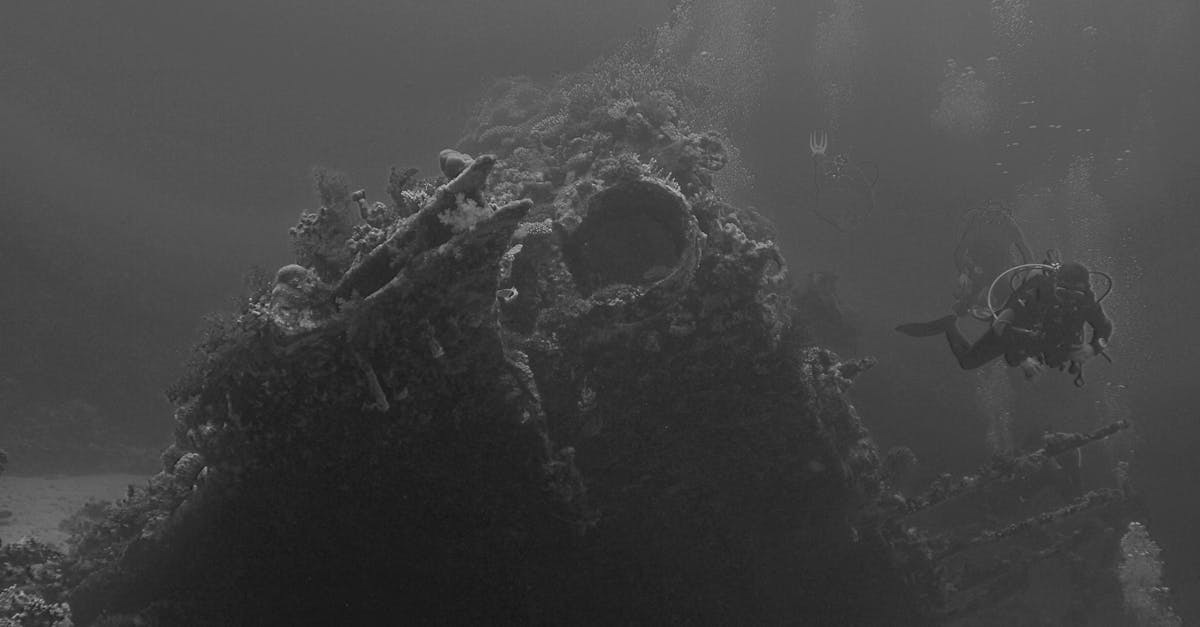
In the late 20th century, deep-sea submersibles allowed scientists to observe the ocean floor directly for the first time. What they found near hydrothermal vents was astonishing. Entire ecosystems existed around cracks in the seafloor where superheated, mineral-rich water poured into the ocean. Giant tube worms, clams, crabs, and bacteria thrived in complete darkness, far from any sunlight. These communities were not merely surviving—they were abundant, fast-growing, and highly specialized.
The key to this mystery was a process called chemosynthesis. Instead of using sunlight to produce energy, certain bacteria use chemical reactions involving sulfur, methane, or hydrogen released from the Earth’s interior. These microbes form the base of a food web that supports larger animals, either by living inside their tissues or by being consumed directly. This discovery expanded the very definition of how ecosystems can function and showed that sunlight, while important on the surface, is not a universal requirement for life.
Equally surprising was how well deep-sea organisms are adapted to extreme pressure and cold. Many have flexible proteins that continue to function under crushing force, slow metabolisms suited to scarce resources, and bioluminescence to communicate or hunt in total darkness. Some species live for decades or even centuries, growing slowly in an environment where energy must be carefully conserved. These adaptations reveal evolution working under conditions vastly different from those on land or in shallow waters.
The discovery of deep-sea life also changed how scientists think about life beyond Earth. If ecosystems can exist without sunlight, fueled instead by chemistry and heat, then similar environments might support life on icy moons or subsurface oceans elsewhere in the solar system. The deep ocean became a natural laboratory for understanding how life might arise and persist in extreme environments across the universe.
Today, the deep sea is recognized as one of Earth’s largest and least explored habitats. Each new expedition continues to uncover unfamiliar species and unexpected biological strategies. What began as a challenge to a single scientific hypothesis has grown into a profound shift in our understanding of life itself. The discovery of deep-sea life reminds us that even on our own planet, entire worlds can exist unseen, thriving in darkness, quietly rewriting the rules we once thought were absolute.