For most of human history, Earth’s surface was assumed to be static. Mountains were thought to rise during biblical floods, continents were believed to have always occupied their current positions, and oceans seemed permanent and immovable. The idea that entire continents could slowly drift across the planet sounded closer to fantasy than science. Yet plate tectonics would eventually become one of the most powerful unifying theories in geology, explaining earthquakes, volcanoes, mountain ranges, and even the long-term evolution of life itself.
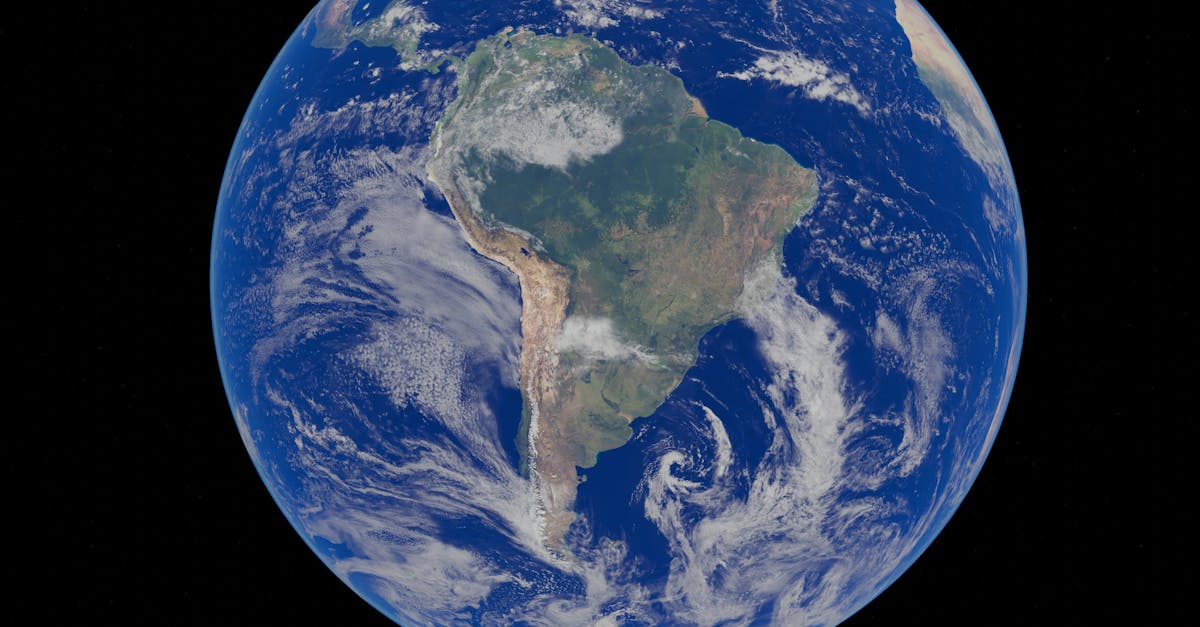
The first major crack in the old worldview appeared in the early 20th century with the work of Alfred Wegener. Wegener noticed that continents like South America and Africa fit together almost perfectly, like pieces of a broken puzzle. More intriguingly, identical fossils and rock formations were found on continents now separated by vast oceans. His proposal, known as continental drift, suggested that continents were once joined together in a single landmass and had since drifted apart. While compelling, Wegener’s theory lacked a crucial ingredient: a convincing mechanism for how solid continents could move.
For decades, continental drift was widely dismissed. The breakthrough came after World War II, when scientists began mapping the ocean floor in detail. What they found beneath the waves transformed geology. Vast underwater mountain chains, such as the Mid-Atlantic Ridge, stretched across the oceans, marked by volcanic activity and frequent earthquakes. Even more surprising, rocks near these ridges were younger than those farther away, forming symmetrical age patterns on either side. This was the missing clue Wegener never had.
These discoveries led to the theory of plate tectonics, which proposed that Earth’s outer shell is broken into rigid plates that float atop a softer, slowly flowing layer of the mantle. These plates move at roughly the speed fingernails grow, but over millions of years their motion reshapes the planet. Where plates pull apart, magma rises and solidifies, creating new crust. Where they collide, crust can crumple into mountains or sink back into the mantle. Where plates slide past one another, stress builds until it is released as earthquakes.
One easily overlooked aspect of plate tectonics is how neatly it explains seemingly unrelated phenomena. Earthquakes, once thought to be random disasters, cluster along plate boundaries. Volcanoes are not scattered arbitrarily but trace the edges of moving plates or hotspots beneath them. Even the distribution of mineral resources and fossil fuels reflects ancient plate movements that shaped sedimentary basins and buried organic matter under precise conditions.
Plate tectonics also rewrote our understanding of deep time. Continents have repeatedly assembled and broken apart, forming supercontinents long before humans existed. These cycles influenced climate by altering ocean currents and atmospheric circulation. At times, drifting continents triggered ice ages; at others, they created warm, shallow seas that fostered explosive biological diversity. The motion of plates, slow and relentless, has been one of the quiet architects of life’s history.
What makes plate tectonics especially remarkable is how recently it was accepted. By the 1960s, multiple lines of evidence—from seismology to paleomagnetism—converged into a single coherent framework. Within a generation, geology transformed from a descriptive science into a dynamic one, capable of explaining both Earth’s past and its ongoing activity. Today, plate tectonics underpins everything from earthquake hazard maps to models of planetary formation beyond Earth.
Perhaps the most humbling lesson of plate tectonics is scale. The ground beneath our feet feels immovable, yet it is part of a vast, slow-motion system driven by heat from Earth’s interior. Mountains rise and erode, oceans open and close, and continents wander across the globe, all without regard for human timescales. Understanding plate tectonics did not just explain Earth’s surface; it revealed that even the solid planet itself is in constant motion.