Few scientific ideas have reshaped how humanity understands itself as deeply as evolution by natural selection. Before this concept emerged, most people believed that living species were fixed, unchanging forms created as they appeared. The realization that life evolves—that every plant, animal, and human is part of a long, branching history shaped by natural processes—transformed biology and quietly altered philosophy, religion, medicine, and even how we think about our place in nature.
At its core, evolution by natural selection explains how complex life arises without foresight or design. Individuals within a species are not identical; they vary in countless small ways. Some of these differences affect survival and reproduction. When resources are limited and environments are challenging, individuals with traits better suited to their surroundings tend to leave more offspring. Over many generations, these advantageous traits become more common, gradually changing the population. No single generation notices the shift, but over immense spans of time, small differences accumulate into dramatic transformations.
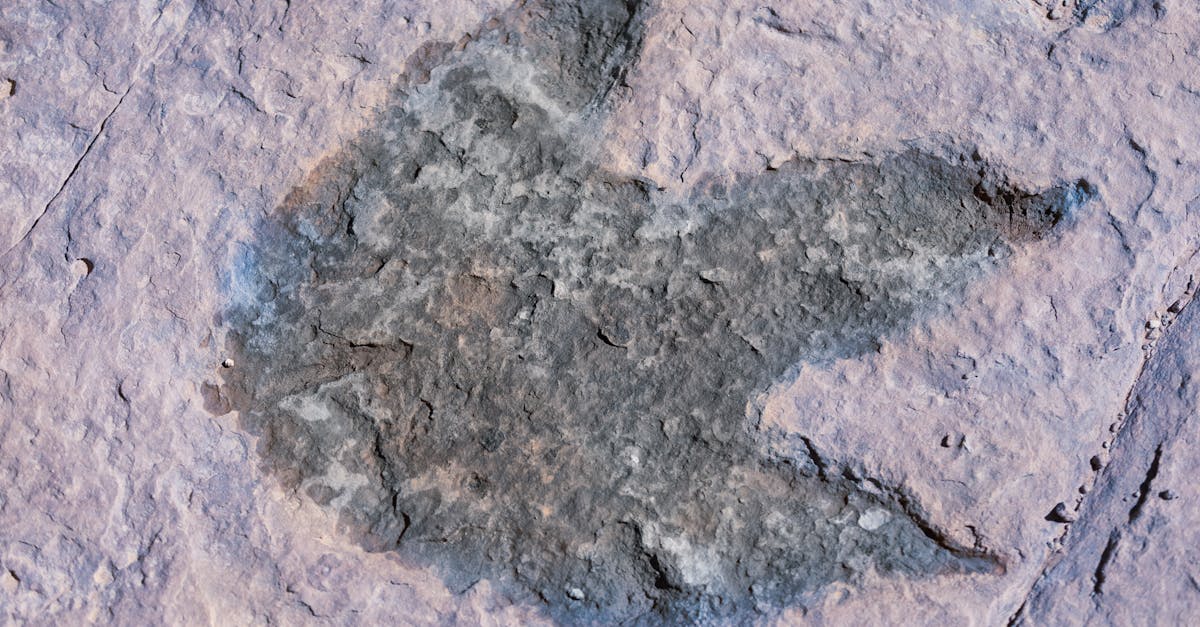
The idea is most closely associated with Charles Darwin, who synthesized it in the mid-19th century after years of observation and reflection. During his voyage aboard the HMS Beagle, Darwin encountered patterns that were difficult to explain under traditional views of life. Fossils resembled living species in the same regions, suggesting continuity rather than replacement. Island animals looked like modified versions of mainland relatives, hinting that geography played a role in shaping life. These observations slowly led him to a radical conclusion: species were not static but descended from common ancestors.
When Darwin published On the Origin of Species, the shock came not only from the claim that species change, but from the mechanism behind it. Natural selection required no guiding hand, only variation, inheritance, and differential survival. This was unsettling because it replaced purpose with process. Adaptations like wings, eyes, or camouflage were not designed in advance; they emerged because countless small changes that worked slightly better were preserved, while less useful ones faded away.
One easily forgotten aspect of natural selection is how slow and indifferent it is. Evolution does not aim for perfection. Traits that are “good enough” persist as long as they allow reproduction, even if they come with drawbacks. This is why humans still suffer from back pain, wisdom teeth problems, and a blind spot in the eye. Natural selection works with existing structures, modifying them incrementally rather than starting from scratch. Evolution is therefore a story of compromise as much as improvement.
Another often overlooked point is that natural selection acts on populations, not individuals. An animal does not evolve during its lifetime; instead, the population shifts statistically across generations. This explains why evolution is invisible in the short term but undeniable over geological time. It also clarifies why extinction is such a powerful force. If environments change faster than populations can adapt, natural selection does not “rescue” them—species simply disappear.
The impact of this idea extends far beyond explaining fossils or biodiversity. Modern medicine relies on evolutionary thinking to understand antibiotic resistance, cancer progression, and emerging diseases. Agriculture uses it to manage pests and improve crops. Conservation biology depends on it to protect genetic diversity and anticipate how species respond to climate change. Even psychology and anthropology draw on evolutionary principles to explore behavior and culture.
Perhaps the most profound consequence of evolution by natural selection is philosophical. Humans are no longer seen as separate from nature but as one branch among many in the tree of life. This realization is both humbling and unifying. Every living organism shares common ancestry, and every adaptation tells a story written by time, chance, and survival.
Evolution by natural selection did more than explain how life changes. It redefined what life is: a continuous, dynamic process shaped by natural laws, endlessly experimenting, and still unfolding today.