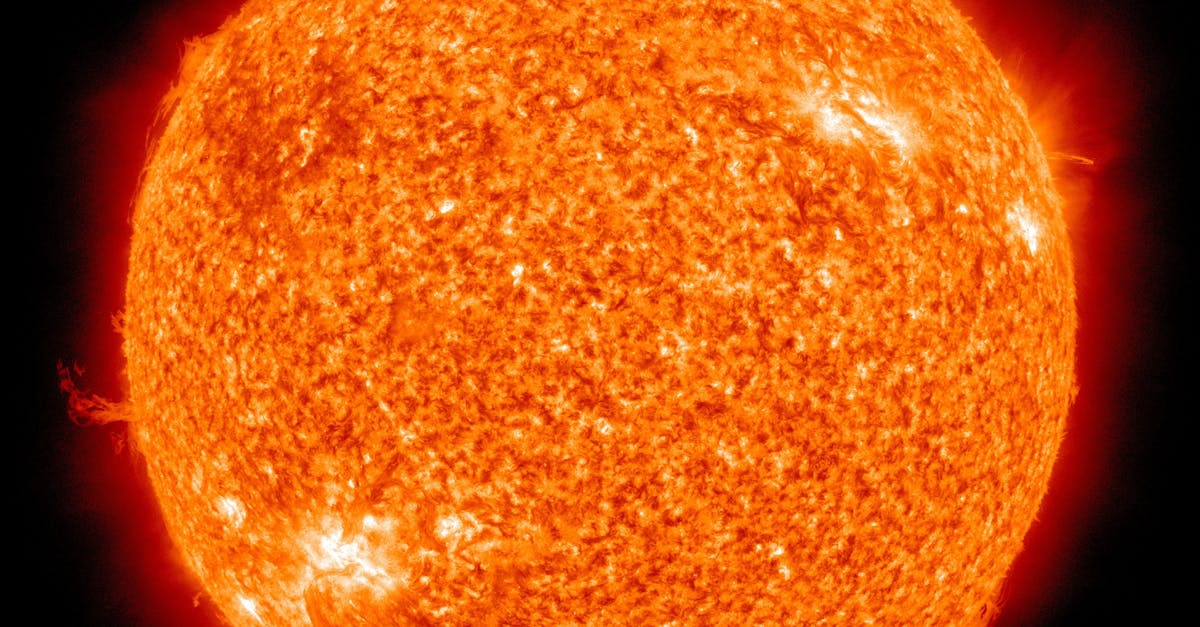
When astronomers look at the night sky, they are not just seeing stars and galaxies—they are also confronting a profound mystery. Everything we can observe directly, from glowing nebulae to massive galaxy clusters, appears to make up only a small fraction of what actually exists. The rest is something unseen and undetectable by ordinary light, yet essential for the universe to look the way it does. This hidden component is known as dark matter, and its discovery reshaped how we understand gravity, galaxies, and cosmic structure.
The idea of dark matter did not arise from abstract theory but from stubborn observational problems. In the 1930s, Swiss astronomer Fritz Zwicky studied the motion of galaxies in the Coma Cluster and noticed something deeply puzzling. The galaxies were moving so fast that, based on the visible mass alone, the cluster should have flown apart long ago. Zwicky proposed that vast amounts of unseen “missing mass” must be providing extra gravitational pull. At the time, this suggestion seemed speculative and was largely ignored, but the problem itself never went away.
Decades later, the mystery returned with greater clarity through the work of Vera Rubin. While studying how galaxies rotate, Rubin found that stars far from galactic centers were moving much faster than expected. According to classical physics, stars at the edges of galaxies should orbit more slowly, just as planets farther from the Sun move at lower speeds. Instead, galaxies behaved as if they were embedded in massive, invisible halos. The simplest explanation was that galaxies contain far more matter than what telescopes can see, and most of it does not emit or absorb light.
What makes dark matter so strange is not just that it is invisible, but that it interacts so weakly with everything else. It does not shine, reflect, or block light, and it barely interacts with ordinary matter except through gravity. This is why dark matter cannot be made of familiar objects like faint stars, planets, or clouds of gas alone. Those possibilities have been carefully tested and found insufficient. Instead, dark matter appears to be something fundamentally different, possibly composed of unknown particles that pass effortlessly through normal matter.
Despite its elusiveness, dark matter leaves unmistakable fingerprints on the universe. One of the strongest pieces of evidence comes from gravitational lensing, where massive objects bend light from distant galaxies. Observations of systems like the Bullet Cluster show that most of the gravitational mass is separated from the hot, visible gas produced during cosmic collisions. This separation strongly suggests that dark matter behaves differently from ordinary matter, reinforcing the idea that it is a distinct component of the cosmos.
Dark matter is also essential for explaining how galaxies formed in the first place. In the early universe, slight density fluctuations in dark matter acted as gravitational seeds, pulling ordinary matter into them. Without this invisible scaffolding, galaxies would not have had enough time to form their complex structures. In this sense, dark matter is not just holding galaxies together today—it made their existence possible billions of years ago.
Yet, for all its importance, dark matter remains unidentified. Experiments deep underground, powerful particle accelerators, and sensitive space telescopes are all searching for clues, but so far the substance itself has not been directly detected. This ongoing mystery is one of modern science’s greatest challenges, sitting at the intersection of astronomy, particle physics, and cosmology.
Dark matter reminds us that discovery does not always come from seeing something new, but from realizing that what we see is not enough. By noticing what is missing, scientists uncovered an invisible framework shaping the universe. Galaxies spin, clusters remain bound, and cosmic structures endure—not because of what we can see, but because of what we cannot.