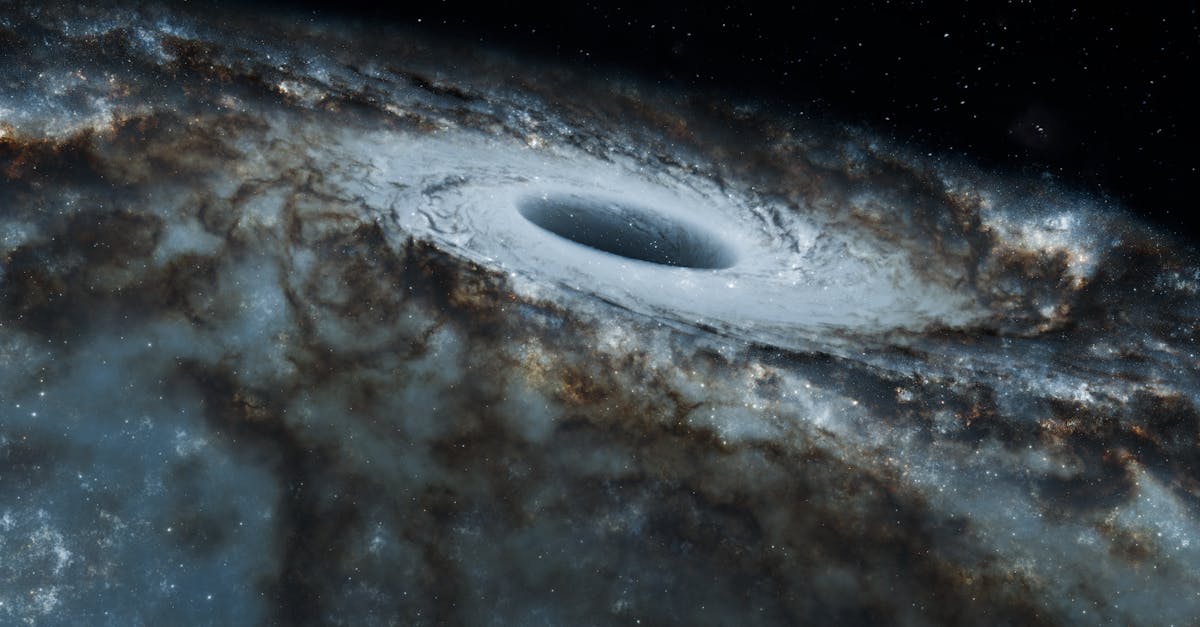
For much of their history, black holes lived in an uncomfortable space between imagination and mathematics. They were not dreamed up by science fiction writers but emerged quietly from equations, as an almost embarrassing consequence of gravity taken to its extreme. For decades, even the scientists who discovered them doubted that such objects could really exist. Today, black holes are no longer theoretical curiosities but observed cosmic realities, reshaping how we understand space, time, and the limits of nature itself.
The story begins with gravity as described by Albert Einstein. His theory of general relativity, published in 1915, redefined gravity not as a force but as the curvature of spacetime caused by mass and energy. Almost immediately, solutions to Einstein’s equations hinted at something strange. In 1916, Karl Schwarzschild found a mathematical solution describing what happens if a mass is compressed into an impossibly small volume. The equations predicted a boundary beyond which nothing—not even light—could escape. Schwarzschild himself likely saw this as a mathematical oddity rather than a real object in the universe.
For decades, black holes were treated with skepticism. Many physicists assumed nature would prevent such extreme collapse from ever occurring. Stars, after all, shine by balancing gravity with internal pressure from nuclear fusion. But as astronomers learned more about stellar life cycles, it became clear that massive stars eventually exhaust their fuel. Without outward pressure, gravity wins. In some cases, the collapse is so complete that no known force can stop it, and a black hole is born. What was once an abstract solution began to look like an unavoidable outcome of stellar evolution.
Even so, proof remained elusive. Black holes emit no light, making them fundamentally difficult to observe. Instead, astronomers had to look for indirect effects: stars orbiting invisible objects, gas heating up and glowing as it spiraled into darkness, and powerful jets shooting from galactic centers. By the late twentieth century, evidence mounted that many galaxies, including our own, harbor supermassive black holes at their cores. The Milky Way’s central black hole, known as Sagittarius A*, revealed itself through the rapid motion of nearby stars, tracing orbits around something massive yet unseen.
The transition from indirect evidence to direct observation marked a turning point. In 2015, scientists working with LIGO detected ripples in spacetime caused by two black holes colliding over a billion light-years away. These gravitational waves matched predictions from general relativity with astonishing precision. Black holes were no longer inferred shadows; they were dynamic objects whose violent mergers could literally shake the fabric of the universe.
Then came the image that changed everything. In 2019, the Event Horizon Telescope released the first-ever image of a black hole’s shadow, captured at the center of a distant galaxy. The blurry orange ring was not a photograph in the traditional sense, but it was direct visual evidence of the event horizon—the point of no return predicted by Einstein’s equations. A few years later, the same technique revealed an image of Sagittarius A*, bringing the reality of black holes uncomfortably close to home.
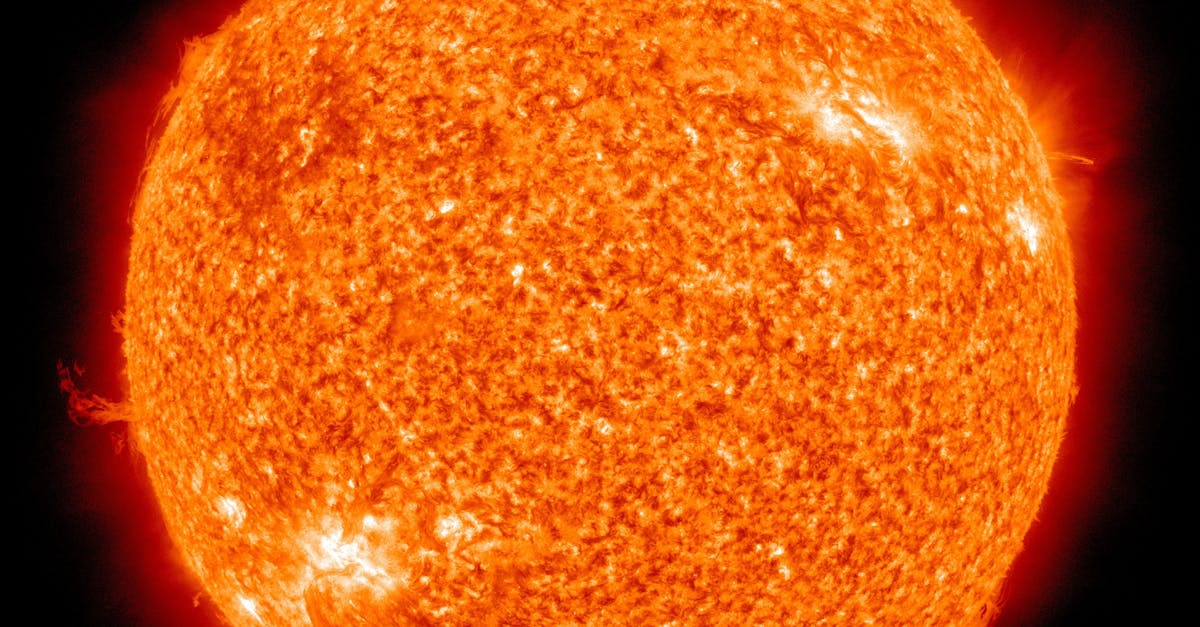
What is often forgotten is that black holes are not cosmic vacuum cleaners roaming the universe. From a distance, they behave like any other massive object. The Sun could be replaced by a black hole of equal mass, and Earth’s orbit would remain unchanged. Their danger lies only in proximity, where gravity becomes extreme and familiar laws of physics begin to break down.
Black holes matter not because they are destructive, but because they test the limits of our understanding. They connect gravity, quantum physics, and cosmology in ways no other objects can. What began as a troubling mathematical result has become one of the most powerful tools for exploring reality itself, reminding us that the universe often takes our boldest equations seriously—even when we hesitate to do so ourselves.