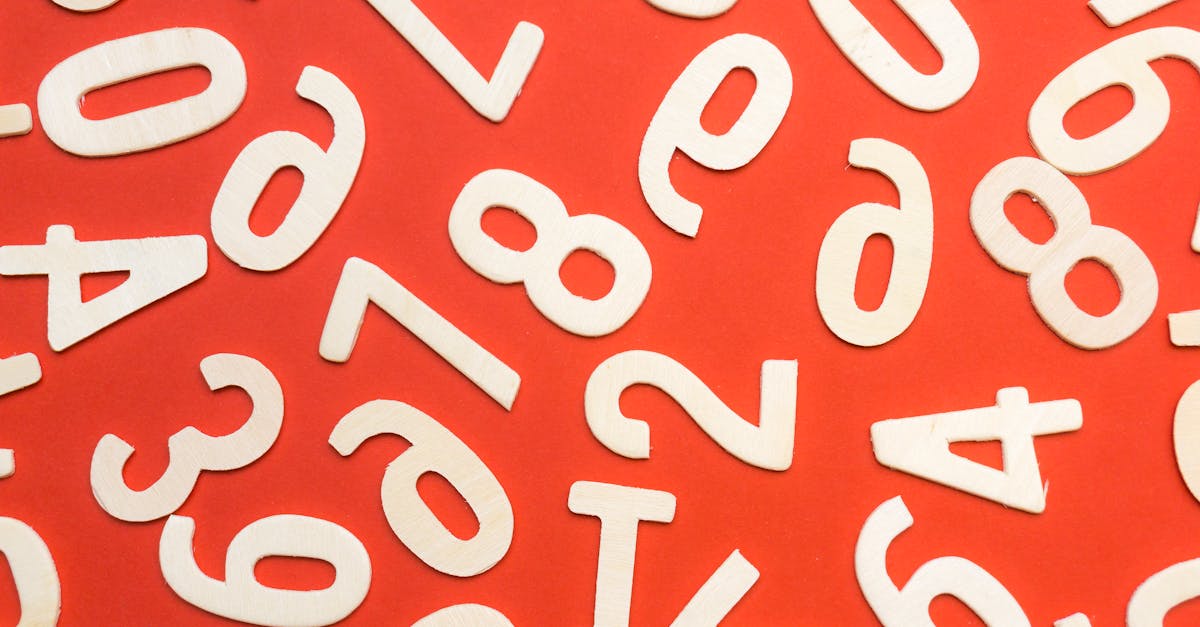
For most of human history, numbers were practical, well-mannered things. They counted sheep, measured land, and tracked trade. You could have three apples or ten coins, but nothing less than nothing, and certainly nothing called zero. The idea that numbers could represent absence, or worse, values below nothing, once felt unnatural—even dangerous. Yet the moment zero and negative numbers were finally accepted, mathematics stopped being a simple counting tool and became a powerful language for describing reality.
Early civilizations had sophisticated number systems, but they worked strictly within the positive world. Ancient Egyptians, Greeks, and Romans all performed impressive calculations without a true zero. The Romans, for instance, had no symbol for it at all. This limitation wasn’t just symbolic—it shaped how problems could be solved. Without zero, equations were awkward, place value systems were clumsy, and the idea of balancing quantities was far from obvious.
The breakthrough came quietly from ancient India. Around the 7th century, the mathematician Brahmagupta described zero not merely as a placeholder, but as a number with its own rules. He explained how zero behaved in addition and subtraction and even tackled the puzzling consequences of dividing by it. This was revolutionary. Zero transformed numbers from tallies into positions, making modern arithmetic possible and paving the way for algebra, calculus, and computing centuries later.
Negative numbers, however, were an even harder sell. While ancient Chinese mathematicians used red and black counting rods to represent gains and losses, European thinkers resisted the idea fiercely. To many, a number smaller than nothing felt illogical. How could you have minus three cows? Even respected scholars dismissed negative solutions as meaningless, calling them “false” or “absurd.”
And yet, everyday life kept contradicting this resistance. Debt existed. Temperatures dropped below freezing. Elevations fell below sea level. Mathematics eventually had to catch up with reality. During the Renaissance, negative numbers began appearing more frequently in algebraic work, though often with hesitation. Mathematicians would find negative results and then explain them away rather than embrace them fully.
The true shift happened when numbers stopped being seen as physical objects and started being understood as abstract concepts. Once numbers were placed on a line extending endlessly in both directions, negative values suddenly made sense. They weren’t strange monsters anymore; they were simply positions relative to zero. This mental leap changed everything. Equations became more flexible, symmetry emerged in mathematics, and entire branches of science gained new tools.
Zero and negative numbers also changed how we think, not just how we calculate. Zero introduced the idea of neutrality and balance, a reference point rather than a quantity. Negative numbers brought direction into mathematics, allowing us to talk about opposites, reversals, and change. Together, they made it possible to model motion, economics, electricity, and even time in ways that were previously impossible.
What’s often forgotten is how controversial these ideas once were. Today, children learn about negative numbers before they fully understand fractions, and zero feels so obvious that it’s hard to imagine mathematics without it. But these concepts had to fight for acceptance. They challenged intuition, clashed with philosophy, and forced mathematicians to redefine what numbers really are.
When numbers finally “learned to behave”—when zero was allowed to stand for nothing and negatives were allowed to exist below it—mathematics crossed a threshold. It stopped being just about counting what you could see and became a system capable of describing what you couldn’t. In that quiet transformation, the foundations of the modern world were laid, one unsettling idea at a time.