For most of human history, chance was seen as something mystical, unpredictable, and governed by fate or divine will. Storms, crop failures, sudden wealth, or devastating losses were interpreted as signs rather than outcomes. It was only when probability theory emerged that randomness began to be understood, measured, and, most importantly, managed. This quiet mathematical revolution reshaped how people gambled, how merchants took risks, and how modern economics learned to function in an uncertain world.
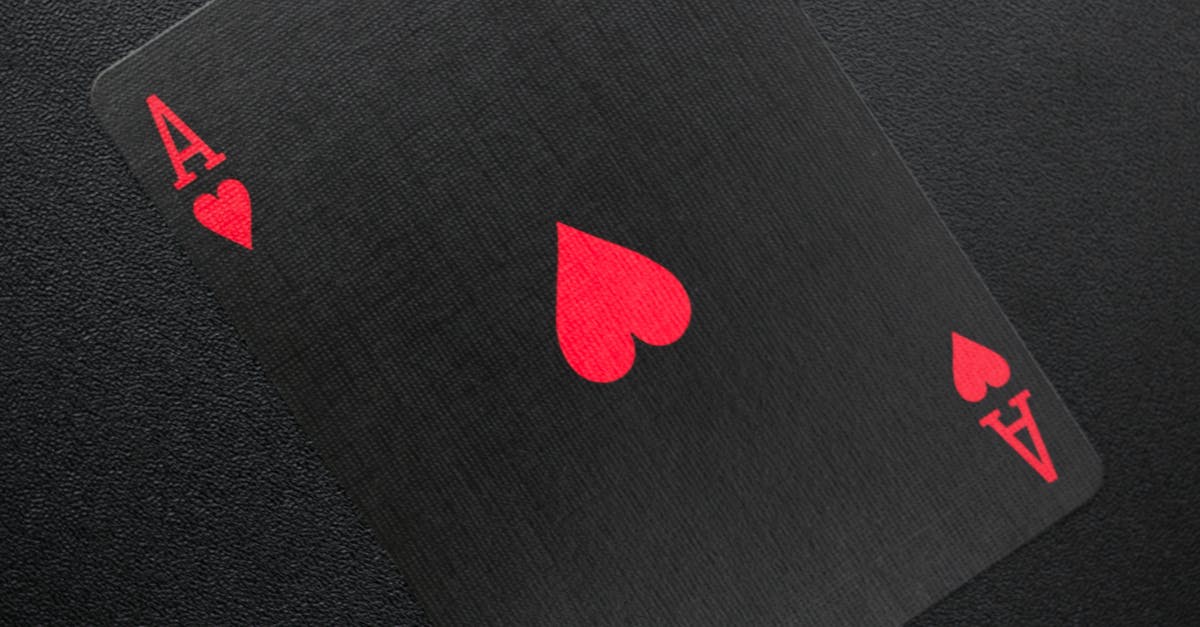
The roots of probability theory are surprisingly informal. It did not begin in universities or observatories but at gaming tables. In the seventeenth century, gambling was wildly popular across Europe, yet even experienced players relied on intuition rather than calculation. Questions like how to fairly divide winnings if a game stopped early, or whether a particular bet was truly advantageous, had no clear answers. This changed when thinkers such as Blaise Pascal and Pierre de Fermat began exchanging letters about games of chance. Their correspondence laid the foundations of probability by treating random events as outcomes that could be counted, compared, and analyzed.
What was revolutionary was not just the math itself, but the mindset it introduced. Probability suggested that uncertainty could be quantified. Even if one could not predict a single dice roll, it was possible to predict patterns across many rolls. This idea quietly undermined centuries of belief in pure luck. Over time, probability transformed gambling from superstition into strategy. Casinos, once vulnerable to clever players, began designing games with built-in statistical advantages, ensuring long-term profits. The house edge, now a familiar concept, is a direct descendant of early probability calculations.
Yet gambling was only the beginning. As probability theory matured through the work of thinkers like Jacob Bernoulli, who introduced the law of large numbers, its relevance spread far beyond games. Merchants and insurers realized that while individual losses were unpredictable, large populations behaved in remarkably stable ways. This insight gave birth to modern insurance. Life expectancy, accident rates, and shipping losses could now be estimated, allowing risk to be spread rather than feared. What once seemed reckless—betting on human life or maritime trade—became a rational business.
Economics was transformed even more deeply. Before probability, economic thought often assumed certainty: rational actors, predictable outcomes, and stable markets. Reality, of course, rarely cooperated. Probability theory introduced the language needed to describe volatility, expectations, and uncertainty. Concepts such as expected value allowed economists to compare choices not just by possible outcomes, but by their likelihood. This made it possible to evaluate investments, price assets, and understand why people sometimes accept small guaranteed losses to avoid rare catastrophic ones.
An easily forgotten consequence of probability theory is how it reshaped human psychology. Once people began thinking probabilistically, they also began misthinking probabilistically. Cognitive biases—like overestimating rare events or misunderstanding randomness—became visible precisely because probability offered a benchmark for rational judgment. Ironically, the same theory that enabled better decisions also revealed how often humans deviate from them, a realization that later influenced behavioral economics.
Today, probability theory underlies everything from stock markets and credit scores to medical trials and climate models. Modern economies could not function without tools that assess risk and uncertainty. What began as debates over dice and cards evolved into a framework that governs global finance and public policy. The most profound change was not mathematical but philosophical: chance was no longer an enemy of reason. Instead, probability taught the world that uncertainty could be studied, anticipated, and, to some extent, mastered.
In learning how to measure chance, humanity learned how to live with risk—and in doing so, reshaped gambling, economics, and the modern world itself.