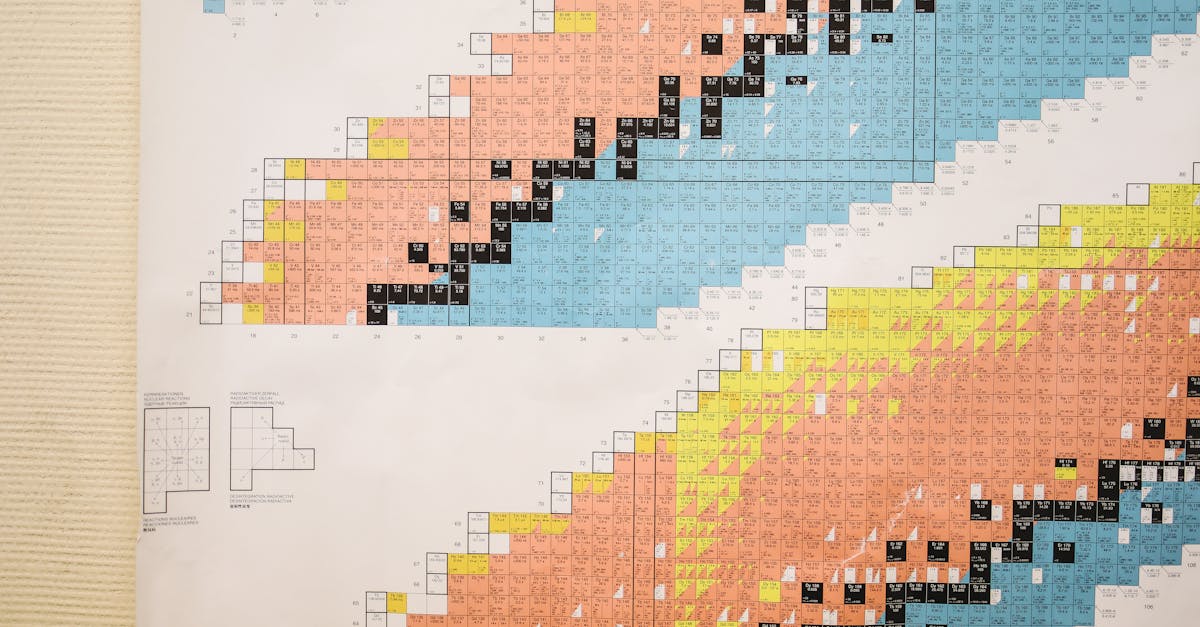
Today, the periodic table feels like one of science’s most settled achievements: a clean grid of boxes, each neatly filled with a known element. It hangs on classroom walls and appears in textbooks as if it were inevitable. But the most fascinating chapter in its history belongs to a time when it was deeply unfinished—when blank spaces mattered as much as the elements themselves, and when patterns were trusted enough to predict the unknown.
In the early nineteenth century, chemistry was a growing but chaotic science. Around sixty elements were known, discovered through painstaking experiments, mining, and advances in laboratory techniques. Chemists could describe how substances reacted, but there was no widely accepted system to organize elements in a meaningful way. Lists existed, but they were little more than inventories. What scientists needed was structure—something that could reveal relationships rather than simply record facts.
Several thinkers noticed that elements seemed to repeat certain behaviors. When ordered by atomic weight, some shared similar properties: reactivity, types of compounds formed, or physical characteristics. These repetitions hinted that nature followed an underlying order. Early attempts to capture this order were imperfect, but they planted a crucial idea: the properties of elements were not random.
The breakthrough came in 1869 with Dmitri Mendeleev, a Russian chemist who approached the problem with an unusual mix of rigor and imagination. Instead of forcing elements into a rigid framework, he allowed the framework to bend. When arranging elements by increasing atomic weight caused mismatches in chemical behavior, Mendeleev prioritized properties over numbers. Even more daring, he left gaps where no known element fit the pattern.
Those empty spaces were not admissions of failure. They were predictions.
Mendeleev argued that these gaps corresponded to elements that had not yet been discovered. He went further, describing their expected properties in detail—how dense they would be, how they would react, even what kinds of compounds they might form. This was an extraordinary claim in an era when many scientists were cautious about speculation. Chemistry had long been grounded in what could be isolated, weighed, and observed. Predicting unseen matter required confidence in patterns as real features of nature, not just convenient classifications.
What made this moment remarkable was not just that Mendeleev predicted new elements, but that he trusted the table more than the data he had. In some cases, he even questioned measured atomic weights, suggesting they were wrong if they disrupted the pattern. History proved him right. As experimental techniques improved, corrected measurements fell neatly into place, reinforcing the table’s logic.
Within a few decades, several of the predicted elements were discovered, and their properties matched Mendeleev’s forecasts with striking accuracy. Each confirmation strengthened the idea that the periodic table was more than an organizational chart—it was a predictive theory. It revealed that chemical behavior followed deep, repeatable rules, even when those rules pointed toward things no one had yet seen.
Interestingly, the periodic table’s early success came before scientists fully understood why it worked. The concept of atomic number, which orders elements by the number of protons in their nuclei, would only be established in the twentieth century. Mendeleev worked without knowledge of electrons, quantum mechanics, or nuclear structure. His table was built on observation, comparison, and pattern recognition rather than a complete theoretical foundation. This makes its predictive power all the more impressive.
The unfinished periodic table teaches an important lesson about science itself. Progress does not always come from having all the answers. Sometimes it comes from recognizing regularities, trusting them, and being willing to leave space for the unknown. The blank squares in Mendeleev’s table were acts of intellectual courage, invitations for future discovery rather than flaws to be hidden.
Today’s periodic table is still evolving, with synthetic elements added at its edges, but its core story remains the same. Long before it was complete, it was already telling the truth about nature. In those early gaps, science learned that patterns could see further than observation alone—and that the unknown, when approached carefully, could be predicted before it was ever found.