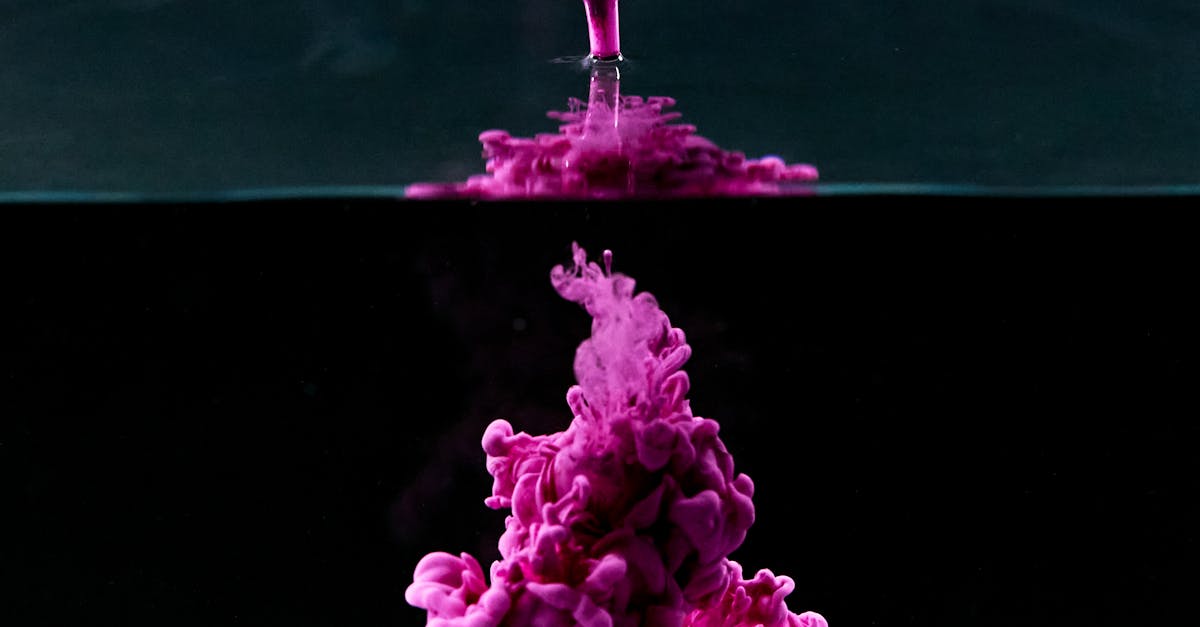
Color feels emotional and immediate, yet behind every vivid painting, textile, or printed page lies a long chemical story. For most of human history, color was rare, unstable, and expensive. The chemistry of pigments and dyes did more than make objects beautiful—it reshaped trade, powered industries, and even influenced scientific thinking about matter itself.
Early colors came directly from nature, and their limitations shaped art for centuries. Earth pigments such as ochres and umbers were reliable because they were mineral-based and chemically stable. They bonded well to surfaces and resisted fading, which is why prehistoric cave paintings still survive. Other colors were far more fragile. Plant-based dyes like indigo or madder depended on complex organic molecules that could degrade under light, air, or washing. Artists and dyers often worked without understanding why colors faded, only that some mysteriously endured while others vanished.
The most famous ancient color, Tyrian purple, revealed an early link between chemistry and power. Extracted from sea snails through a laborious chemical process, its color came from bromine-containing organic compounds. The difficulty of production made it extraordinarily expensive, turning purple into a symbol of royalty. Color chemistry here directly shaped social hierarchy, long before anyone could name the molecules involved.
The real turning point came when chemistry became a modern science. In the 18th and early 19th centuries, scientists began identifying elements, reactions, and molecular structures, and color was no longer just something to extract—it could be designed. The accidental discovery of synthetic dyes by William Henry Perkin in 1856 marked a revolution. While attempting to synthesize quinine, Perkin instead created mauveine, the first artificial aniline dye. Unlike natural dyes, it was bright, reproducible, and could be manufactured at scale.
This single discovery transformed both art and industry. Suddenly, vibrant purples, blues, and reds were affordable to the middle class. Fashion changed almost overnight, and entire chemical industries emerged around dye production. Less obviously, the dye industry helped give birth to modern industrial chemistry. The techniques developed to control color—purification, reaction optimization, quality control—later fed into pharmaceuticals, explosives, and plastics.
Pigments followed a parallel evolution. Traditional pigments relied on heavy metals like lead, mercury, and cadmium, producing intense colors but also serious health risks. Over time, chemists learned how crystal structure and electron behavior influence color. When light strikes a pigment, electrons absorb specific wavelengths, and the remaining light is reflected to our eyes. By manipulating molecular structure rather than relying on toxic elements, safer synthetic pigments became possible.
An often-forgotten consequence of color chemistry is how it changed scientific visualization. Stable inks and pigments allowed accurate maps, diagrams, and printed textbooks. Scientific knowledge spreads more easily when it can be seen clearly, and color played a subtle but essential role in standardizing information.
Even today, the chemistry of color remains central to modern technology. The same principles that once colored tapestries now drive OLED screens, solar cells, and medical imaging. Organic dyes absorb light efficiently; inorganic pigments scatter it precisely. What began as a quest for beauty evolved into a sophisticated understanding of how matter interacts with light.
Color may seem like surface decoration, but its chemistry runs deep. Pigments and dyes taught humanity how to control molecules, scale reactions, and transform raw materials into something both useful and meaningful. In doing so, they quietly bridged art and industry, showing that beauty and chemistry are often the same thing seen from different angles.