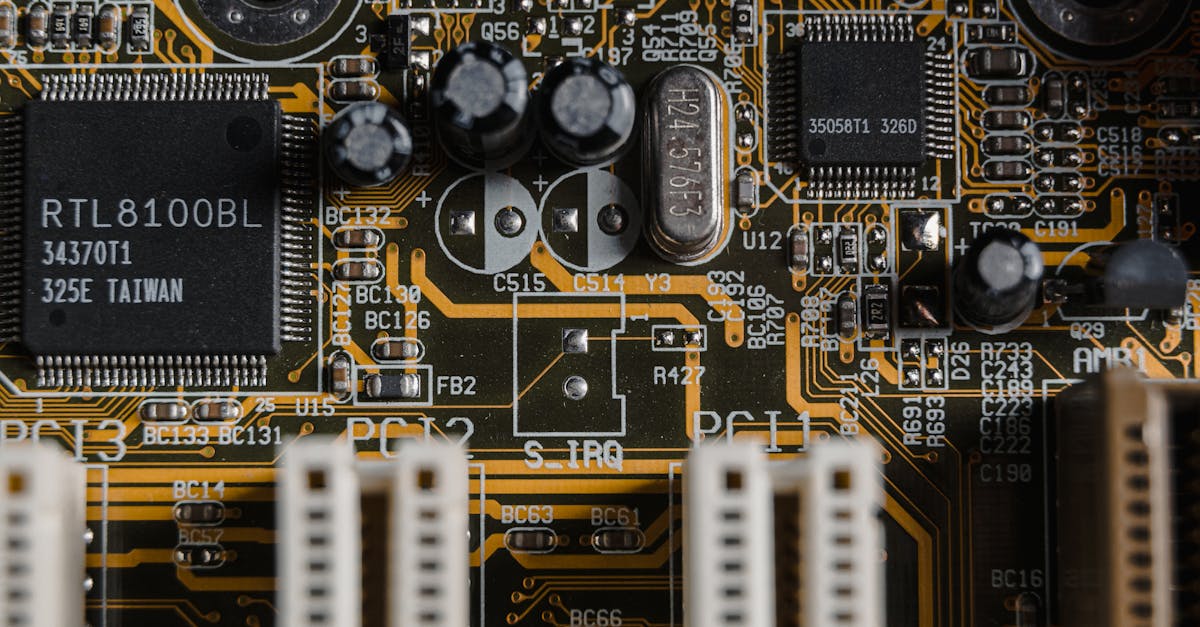
Every time you open an app, stream a video, or send a message, you are relying on one of the most important discoveries of modern science: semiconductors. They are so deeply embedded in daily life that it is easy to forget how unusual and revolutionary they are. Semiconductors are not just materials used to make electronics smaller; they represent a new way of controlling electricity, one that made computers, smartphones, and the digital age itself possible.
To understand why semiconductors matter, it helps to start with a simple distinction. Materials traditionally fall into two categories: conductors, like copper, which let electric current flow easily, and insulators, like glass or rubber, which block it. For a long time, this seemed like a complete picture. Then scientists began to notice materials, especially silicon and germanium, that behaved somewhere in between. Under certain conditions they conducted electricity, and under others they did not. This strange, controllable behavior is what earned them the name “semiconductors.”
The real breakthrough came in the mid-20th century, when researchers learned that the electrical properties of these materials could be precisely engineered. By adding tiny amounts of impurities in a process called doping, scientists could create regions with extra electrons or regions with a shortage of electrons, known as “holes.” This may sound like a small detail, but it changed everything. Suddenly, electricity could be guided, switched, and amplified inside a solid material without moving parts.
This insight led directly to the invention of the transistor in 1947 at Bell Labs, by John Bardeen, Walter Brattain, and later refined by William Shockley. The transistor replaced bulky, fragile vacuum tubes and could act as a switch or amplifier while using far less power. This single invention is often considered the true birth of modern electronics. Without it, computers would still fill rooms and consume enormous amounts of energy.
What makes semiconductors especially powerful is their relationship with quantum physics. At the atomic level, electrons in a semiconductor can occupy specific energy bands. The gap between these bands, known as the band gap, determines how easily electrons can move. Silicon’s band gap turns out to be almost perfect for electronic switching at everyday temperatures. This “just right” property is not obvious or intuitive, and it was only understood through advances in quantum theory in the early 20th century.
An easily forgotten fact is that early semiconductor devices were not immediately reliable. Temperature changes, impurities, and manufacturing imperfections caused unpredictable behavior. Decades of materials science and industrial refinement were required before chips became stable enough for mass production. The clean rooms and ultra-pure silicon wafers used today are the result of this long struggle for consistency.
Once transistors could be made reliably, another leap followed: integration. Instead of wiring individual transistors together, engineers learned to place thousands, then millions, and now billions of them onto a single silicon chip. This led to the integrated circuit and, eventually, the microprocessor. The steady doubling of transistor counts described by Moore’s Law is not a law of nature, but a testament to how well semiconductor physics can be scaled and controlled.
Today, semiconductors do far more than compute. They sense light in cameras, regulate power in electric vehicles, enable communication in satellites, and control medical devices. Even renewable energy depends on them, since solar panels are essentially large semiconductor devices designed to convert light into electricity.
In short, semiconductors are the quiet foundation of the digital world. Their discovery transformed electricity from something that merely flowed into something that could be commanded. Every computer chip, no matter how advanced, is still built on that original realization: that by carefully shaping matter at the atomic level, humans could teach electrons when to move, when to stop, and how to carry information.