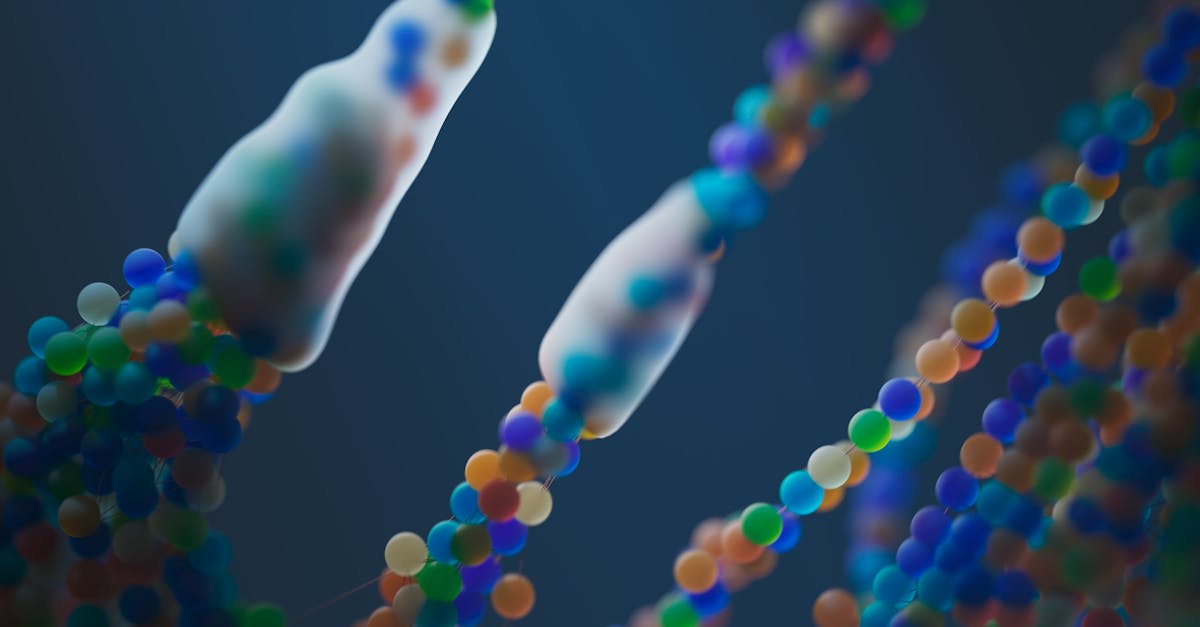
For most of human history, life’s deepest mystery was not how organisms looked or behaved, but how they managed to reproduce with such astonishing consistency while still allowing variation. Parents resembled children, traits skipped generations, and diseases seemed to follow hidden rules, yet no one knew where biological instructions were stored or how they worked. The discovery of DNA’s double helix in the mid-20th century did not merely answer a scientific question; it revealed that life itself runs on a readable, chemical code.
Before DNA entered the spotlight, proteins were widely believed to be the carriers of heredity. They were complex, varied, and active in cells, while DNA appeared monotonous, made of repeating chemical units. This assumption slowed progress for decades. The turning point came when experiments showed that DNA, not protein, could transmit genetic information. Even then, scientists faced a deeper challenge: knowing DNA mattered was not the same as understanding how it worked. The structure of the molecule had to explain both stability and flexibility—how genetic information could be preserved and copied, yet also change over time.
That breakthrough arrived in 1953, when James Watson and Francis Crick proposed the now-famous double helix model. Their insight was elegant rather than purely experimental. By combining chemical knowledge with existing data, they realized that DNA consists of two strands twisted around each other, with complementary base pairs linking them like rungs on a ladder. Adenine always pairs with thymine, and cytosine with guanine. This simple rule immediately explained replication: each strand could serve as a template for making its partner.
What is often forgotten is how crucial X-ray diffraction data were to this discovery. The clearest images of DNA’s structure came from the work of Rosalind Franklin, whose meticulous experiments revealed the helical nature of the molecule and its precise dimensions. Her famous Photograph 51 provided the geometric clues that made the double helix unavoidable. At the time, the importance of her contribution was not fully acknowledged, a reminder that scientific revolutions are also shaped by human dynamics, credit, and bias.
The power of the double helix lies in how much it explains at once. The sequence of bases along DNA encodes instructions for building proteins, which in turn shape cells and organisms. Errors in copying this sequence create mutations, the raw material of evolution. Repair mechanisms maintain accuracy, while occasional mistakes introduce novelty. In one structure, biology found a solution to heredity, development, disease, and evolution.
Another easily overlooked aspect is how chemically modest DNA actually is. Its strength does not come from complexity, but from order. With only four bases and a repeating backbone, DNA shows how life relies on combinatorial richness rather than endless variety. A short sequence can act as a genetic switch, while longer stretches define entire organisms. This economy of design is one reason DNA could be reliably copied billions of times over billions of years.
Reading the code of life did not end with the double helix; it began there. From understanding genetic diseases to developing forensic identification, biotechnology, and modern medicine, the structure of DNA became the foundation for entire scientific fields. Yet its discovery remains a lesson in curiosity and synthesis. The code of life was not unlocked by a single experiment, but by connecting fragments of evidence into a coherent picture.
In revealing DNA’s double helix, science learned something profound: life is written, and once you know the language, you can begin to read its story.